
## Control the Narrative, Not the Noise
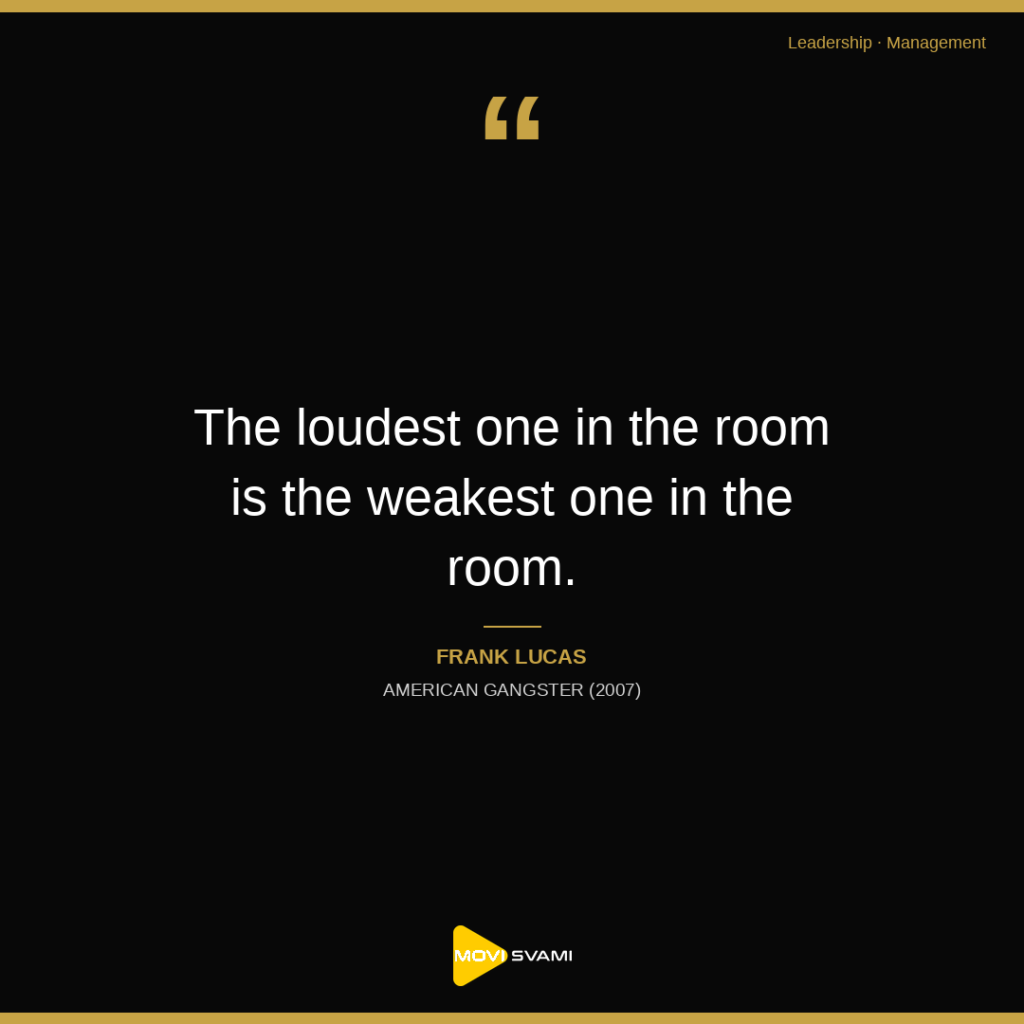
The scene unfolds in a dimly lit room, the air thick with tension. Frank Lucas, the enigmatic drug kingpin portrayed by Denzel Washington in *American Gangster* (2007), sits across from a rival, his hands folded, his expression unreadable. The room is a cacophony of shouting, threats, and chaos—yet Lucas remains eerily calm, his eyes fixed on the man before him. This is not a moment of weakness but of calculated dominance. It is here, in this crucible of power and peril, that Lucas delivers one of the most incisive lines in cinematic history: *”The loudest one in the room is the weakest one in the room.”*
This quote, spoken during a high-stakes negotiation, encapsulates the essence of Frank Lucas’s philosophy. At the time, Lucas was facing a brutal reckoning. His operation, which had built a fortune through the sale of heroin in the 1970s, was under siege by law enforcement and rival gangs. The noise—media scrutiny, police raids, and the constant threat of betrayal—threatened to unravel everything he had built. Yet Lucas refused to let the clamor dictate his actions. Instead, he chose to control the narrative, silencing the distractions that could have derailed his empire.
## The Quote in Context: Power Through Silence
Frank Lucas’s line is more than a rhetorical flourish; it is a battle cry. In the film, Lucas is portrayed as a man who thrives in the shadows, leveraging his understanding of human psychology to outmaneuver his enemies. His business model was built on a simple yet radical premise: bypass the middlemen, cut out the noise, and deliver the product directly. By doing so, he avoided the corruption and inefficiencies that plagued the drug trade. But this approach required more than operational ingenuity—it demanded psychological fortitude.
The stakes for Lucas were existential. The noise around him was not just external; it was internal as well. He had to navigate the treachery of his own associates, the moral compromises of his trade, and the relentless pursuit of the FBI. Yet, rather than succumb to the chaos, Lucas chose to focus on what truly mattered: his vision, his control, and his survival. His quote is a reminder that in the face of overwhelming distractions, the most powerful leaders do not shout to be heard. They listen, act, and ensure their message is clear.
## Leadership Principle: The Power of Focus
Frank Lucas’s philosophy offers a profound lesson for modern leaders: the ability to control the narrative is the cornerstone of effective management. In business, as in crime, the loudest voices often drown out the ones that matter most. Executives are constantly bombarded by data, opinions, and distractions—each vying for attention. Yet, the most successful leaders understand that their role is not to respond to every noise but to shape the story that defines their organization.
This principle is rooted in the concept of *strategic focus*. A leader’s narrative is the framework through which their team interprets goals, values, and priorities. When a leader allows external noise to dictate their actions, they risk losing sight of their core mission. Lucas’s ability to remain composed in the face of chaos was not just a matter of temperament—it was a deliberate choice to prioritize his vision over the distractions that could have fractured his operation. For managers, this means cultivating the discipline to filter out the noise and stay aligned with long-term objectives.
## Real-World Application 1: Crisis Management
One of the most critical moments for a leader is during a crisis. Whether it’s a product recall, a cybersecurity breach, or a PR disaster, the noise can be overwhelming. In such situations, the instinct is to respond immediately to every rumor, accusation, or criticism. However, this often leads to reactive decisions that exacerbate the problem.
Consider a company facing a backlash over a controversial product launch. The noise includes social media outrage, shareholder concerns, and media speculation. A leader who allows this chaos to dictate their actions might issue a flurry of statements, trying to address every concern. But this approach risks appearing defensive and incoherent. Instead, the leader should control the narrative by focusing on the core issue: the product’s value proposition and the company’s commitment to transparency. By communicating clearly and consistently, the leader can steer the conversation back to what matters most.
## Real-World Application 2: Delegation and Micromanagement
Another scenario where controlling the narrative is essential is in delegation. Micromanagement often stems from a leader’s fear that their team will deviate from the intended path. This fear is amplified by the noise of competing priorities, deadlines, and external pressures.
Imagine a manager tasked with launching a new project. The noise includes demands from stakeholders, the pressure to meet deadlines, and the constant influx of emails. If the manager allows this noise to dictate their approach, they may become overly involved in every detail, stifling creativity and morale. Instead, the leader should communicate the vision clearly, empower the team to execute, and trust in their expertise. By doing so, the leader not only maintains control of the narrative but also fosters a culture of autonomy and accountability.
## Real-World Application 3: Strategic Decision-Making
Finally, controlling the narrative is crucial in strategic decision-making. In a rapidly changing market, leaders are often inundated with data, trends, and conflicting advice. The noise can make it difficult to discern what is relevant and what is merely distraction.
Take, for example, a company evaluating a potential market expansion. The noise includes competitor moves, regulatory changes, and economic uncertainty. A leader who allows this noise to dictate their strategy might hesitate, waiting for certainty. But the most effective leaders cut through the noise by focusing on their long-term vision. They ask: *What does this decision align with our core values? How does it advance our mission?* By anchoring decisions in their narrative, leaders ensure that every action reinforces their strategic direction.
## Closing: Reflect on Your Narrative
Frank Lucas’s wisdom is a timeless reminder that leadership is not about volume but vision. In a world saturated with noise, the ability to control the narrative is a rare and powerful skill. As you navigate your own challenges, ask yourself: What is the story you are telling? Are you allowing the noise to distort it?
Take a moment to reflect. When was the last time you allowed external distractions to dictate your actions? What would happen if you chose to control the narrative instead? The loudest voices may drown out the truth, but the quietest leaders often leave the deepest impact.