
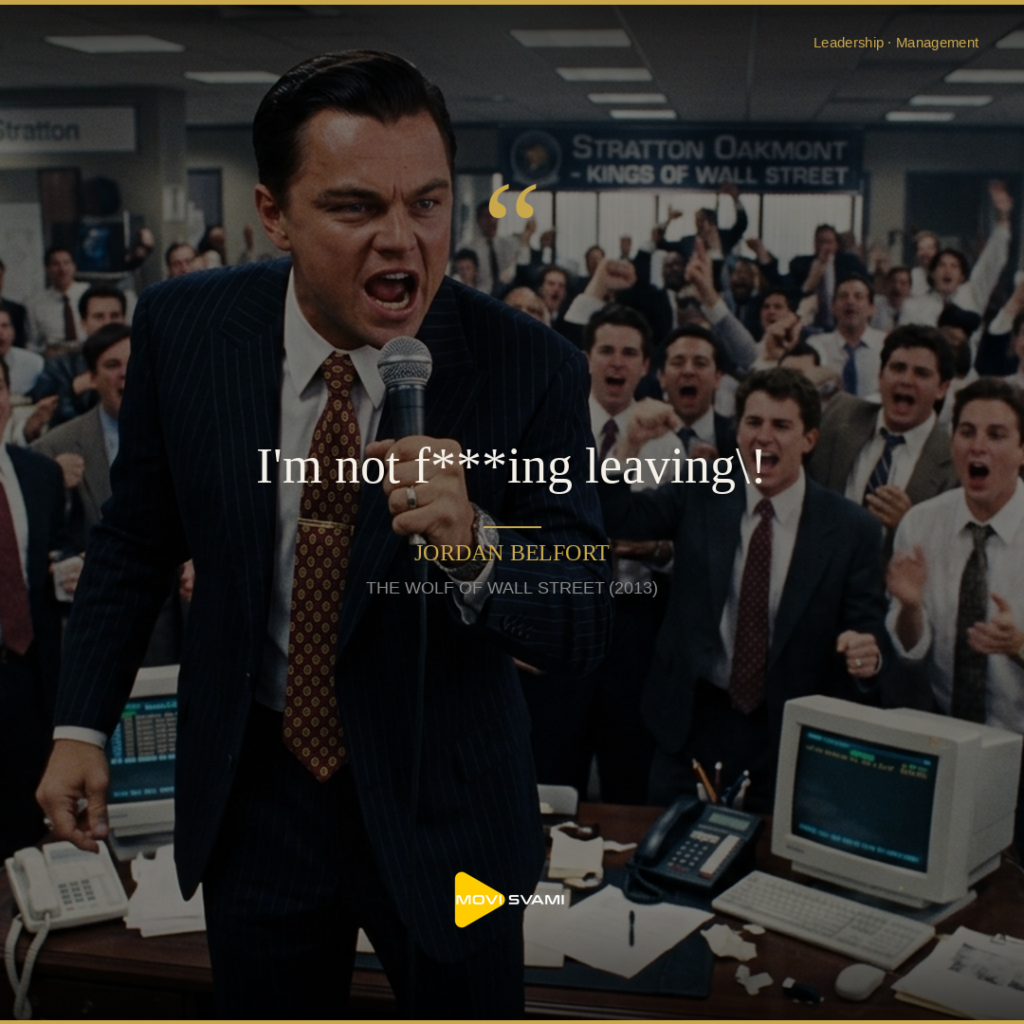
The microphone screeches with feedback. Three hundred brokers freeze, eyes wide, faces slick with the sweat of a July afternoon and impending doom. Outside, the FBI waits with warrants; inside, the stock ticker bleeds red. The company is hemorrhaging money, the SEC has frozen assets, and the logical move—the *rational* move—is to surrender, settle, and salvage what personal freedom remains. Instead, Jordan Belfort climbs onto a desk, grabs the PA system, and begins to chant. “I’m not leaving. I’m not leaving. I’m not fucking leaving!” The words are crude, desperate, and electrically effective. In that moment of institutional collapse, conviction becomes the only currency left.
This scene from Martin Scorsese’s *The Wolf of Wall Street* captures a specific species of leadership crisis: the existential inflection point where external validation evaporates and internal fortitude becomes the sole remaining asset. Belfort, for all his eventual criminality, understood something primal about organizational psychology. When Stratton Oakmont faced its terminal velocity—Steve Madden stock imploding, federal agents circling, liquidity freezing—his brokers were not looking at spreadsheets for reassurance. They were looking at him. The chant was not merely defiance of the FBI; it was an emotional anchor dropped into a hurricane. It signaled that the captain intended to sink with the ship rather than abandon it, paradoxically giving the crew a reason to keep bailing water.
What this reveals about scale-up leadership is the uncomfortable necessity of “irrational conviction”—a deliberate suspension of panic that borders on the delusional, deployed precisely when data suggests retreat. In the lifecycle of high-growth companies, there exist moments—often between Series B and Series C, or during sudden regulatory shifts—when rational analysis suggests insolvency, pivot, or soft landing. Investors whisper about acqui-hires. The board circulates wind-down protocols. Talent updates LinkedIn profiles during lunch breaks. These are the moments when capital becomes cheap and confidence becomes priceless. The leader’s primary function shifts from strategy to stability, from decision-making to emotional containment. Research in organizational behavior consistently demonstrates that anxiety is contagious; when the founder trembles, the firm hemorrhages talent faster than cash. The “I’m not leaving” mindset is therefore a fiduciary duty in disguise—the refusal to externalize panic, thereby preserving the human capital necessary to survive the winter.
Yet this persistence requires rigorous ethical guardrails, lest it degenerate into the catastrophic stubbornness that characterized Belfort’s actual trajectory. Conviction without integrity is merely fraud with stamina. The difference lies in what, exactly, the leader refuses to leave. Is it the mission, the team, and the fiduciary duty to stakeholders? Or is it the fraud, the inflated valuations, and the house of cards? Belfort’s failure was not his refusal to abandon his brokers; it was his refusal to abandon criminality. For scale-up leaders today, the imperative is to hold the line on vision while releasing the death-grip on tactics that have proven toxic or illegal. Persistence must be tethered to moral clarity, not personal aggrandizement.
Consider three concrete scenarios where this mindset determines survival. First, the liquidity crisis: a SaaS company with six months of runway misses its Q3 milestone, triggering panic among investors who begin pushing for a distressed sale. The rational move is to accept the term sheet and return pennies on the dollar. The “not leaving” move is to cut burn to the bone—founder salary to zero, office space sublet, non-core engineers transitioned to contractor status—while personally dialing the top twenty customers to secure multi-year commitments. This is not denial; it is the recognition that capital follows conviction, and that teams disband when they sense capitulation.
Second, the regulatory assault: a fintech scale-up faces a sudden enforcement action from banking regulators that threatens its core revenue stream. Legal counsel advises immediate pivot to a “boring” B2B infrastructure play with lower margins but guaranteed compliance. The board concurs. The “not leaving” response involves engaging regulators not as antagonists but as partners in market integrity, temporarily slowing growth to rebuild compliance architecture while maintaining the original consumer-facing vision. This requires the discipline to distinguish between the illegal (which must change) and the merely difficult (which must be endured).
Third, the talent exodus during reputational crisis: a health-tech firm suffers a data breach that lands it on the front page; Glassdoor fills with anonymous toxicity; recruiters poach your best engineers with 30% premiums. The flight instinct is rational for employees; the “not leaving” instinct must be visible for the leader. This means daily all-hands transparency about remediation, personal accountability without performative self-flagellation, and physical presence on the floor during the worst weeks. People do not quit companies; they quit leaders who telegraph escape plans.
The next time your board slides the wind-down spreadsheet across the table, or your lead investor suggests “exploring strategic alternatives,” ask yourself: What am I refusing to leave, and why? Is it the ethical mission your team signed up for, or merely your own refusal to admit error? The line between heroic persistence and pathological stubbornness is drawn in integrity. Choose your hill wisely before you plant the flag.